Exit Strategy for Polyhouse Farming
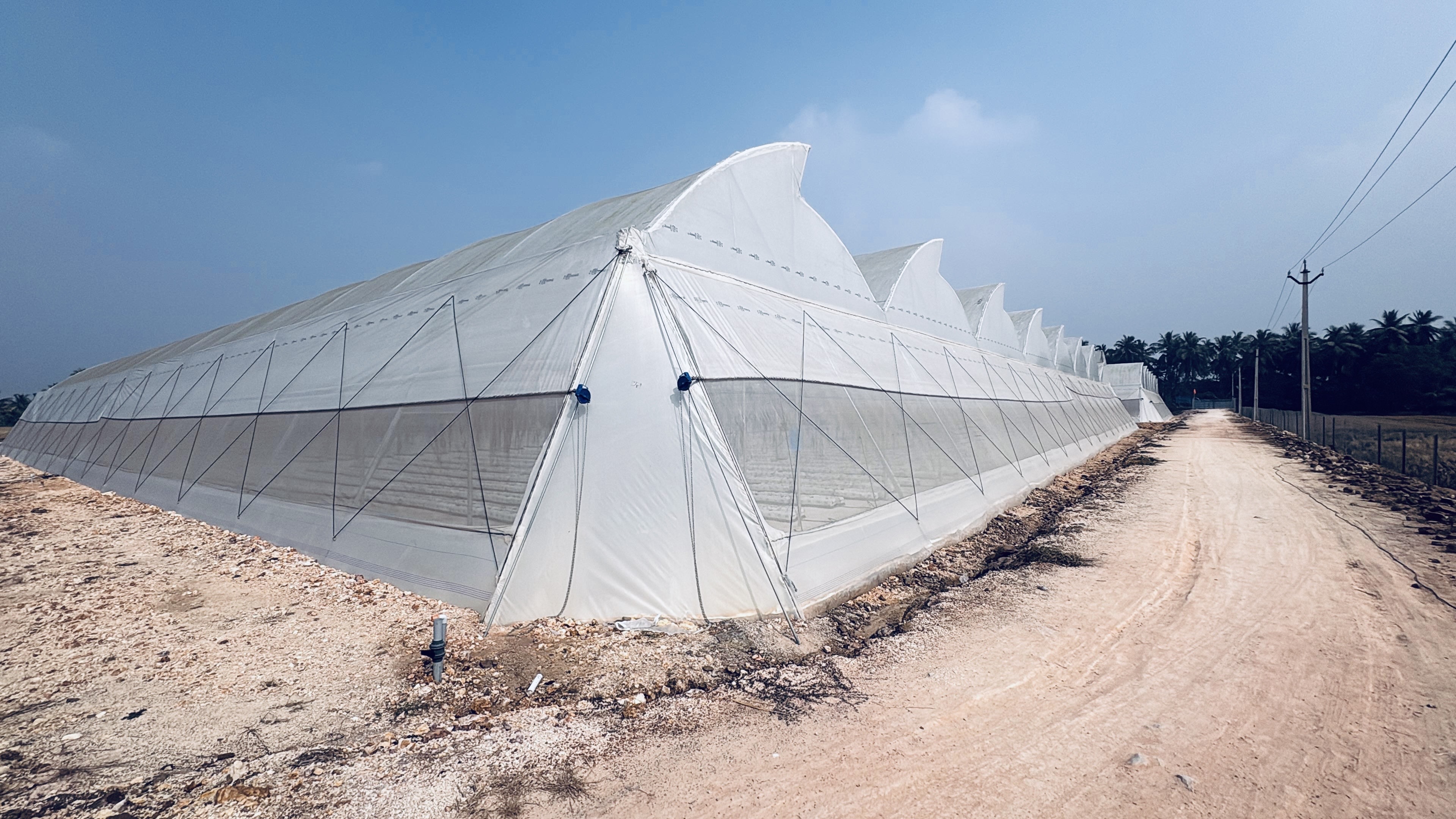
Exit Strategy for Polyhouse Farming: How to Plan a Profitable & Smooth Exit
Polyhouse farming is often presented as a success story of modern agriculture- higher yields, better quality, and predictable production. Yet one important conversation is usually missing: what happens when the polyhouse owner wants to step away?
An exit strategy is not about abandoning farming or admitting failure. It is about recognizing that a polyhouse is a business asset, not just a farm. Like any serious investment, it needs a clearly thought-out path for transition, monetization, or handover. Farmers who plan their exit early tend to make calmer decisions, preserve value, and avoid distress sales later.
Why Exit Planning Matters in Polyhouse Farming
Unlike open-field farming, a polyhouse involves high upfront capital- structures, irrigation systems, climate control, automation, and often loans or subsidies. Over time, these investments either create a valuable enterprise or become a burden if continuity is not planned.
Many farmers assume they will “figure it out later.” In reality, unplanned exits usually happen due to health issues, family constraints, financial pressure, or sudden market changes. At that stage, decisions are rushed and value is lost. A planned exit, on the other hand, gives the owner leverage and choice- whether that means selling at the right time, leasing the operation, or transferring it smoothly to someone else.
Major Exit Strategies for Polyhouse Owners
1. Selling the Polyhouse as a Running Business
This is the most profitable exit option.
• What the buyer gets:
• Land (if owned)
• Polyhouse structure
• Irrigation, fertigation & automation systems
• Standing crops and buyer contracts
• Trained workforce & SOPs
• Best suited for:
• Well-maintained polyhouses with stable income and documented yields.
• Key advantage:
• Higher valuation as a “going concern” rather than just assets.
2. Leasing or Renting the Polyhouse
Instead of selling, you can lease the polyhouse to:
• Young farmers
• Agri-startups
• Nursery operators
• Contract growers
• Income model: Monthly or annual rent
• Ownership: You retain land and structure
• Best suited for:
• Owners who want recurring income without day-to-day operations.
3. Strategic Sale to Agribusiness or Large Growers
Larger agri-companies or exporters may buy polyhouses to:
• Expand capacity
• Secure supply chains
• Enter new regions
• Value increases if you have:
• Offtake agreements
• Export-grade crops
• Certifications (GAP, organic, residue-free)
4. Management Buyout (MBO)
In this model, your existing manager or team buys the polyhouse, often in stages.
• Benefits:
• Smooth transition
• Business continuity
• Less operational disruption
• Limitation:
• May involve delayed payments or seller financing.
5. Family Succession or Transfer
If the next generation is interested, ownership can be transferred through:
• Legal succession planning
• Partnership restructuring
• Gradual handover
This is common in family-owned agricultural land but requires formal documentation to avoid disputes.
6. Asset Liquidation (Last Resort)
If continuation is not viable:
• Sell polyhouse structure
• Sell irrigation equipment
• Sell land separately
• Downside:
• Lowest returns, but fastest exit.
How Is a Polyhouse Valued During Exit?
Buyers usually look at four major factors:
1. Physical Assets
• Polyhouse structure quality & lifespan
• Irrigation, automation, climate control
• Power systems (solar, pumps)
2. Financial Performance
• Yield per square meter
• Profit margins
• Cost efficiency
• Crop cycles per year
3. Market & Contracts
• Regular buyers
• Institutional or retail tie-ups
• Price stability
4. Legal & Subsidy Status
• Government subsidies availed
• Loan obligations
• Transfer restrictions (important!)
How to Prepare a Polyhouse for Exit (Value Maximization Tips)
• Maintain clean financial records (3–5 years)
• Create an asset list with photos
• Document crop protocols and yields
• Fix structural or irrigation issues
• Secure buyer contracts if possible
• Conduct an agronomic audit
A well-documented polyhouse can sell 20–30% higher than an undocumented one.
When Should You Start Planning Your Exit?
Ideally, from the day you start the polyhouse.
Even if you plan to operate for 10–15 years:
• Exit planning improves decision-making
• Helps structure loans and subsidies better
• Makes succession or sale smoother
An exit strategy is not pessimism - it is professionalism.
Final Thoughts
Polyhouse farming is not just agriculture; it is a capital-intensive business asset. Like any business, it deserves a clear entry and exit plan.
Whether you choose to sell, lease, transfer, or liquidate, the right exit strategy can:
• Protect your investment
• Reduce stress
• Create financial freedom
• Enable new opportunities
Smart farmers don’t just grow crops - they grow options.
Recent Posts
Your Farm. Your Future.
Every great harvest starts with the right conversation. Let our experts design a polyhouse built around your land, crop, and climate.
Talk to an ExpertFrequently Asked Questions
In this video, Abhishek Bhatt, Director of Agriplast Protected Cultivation, will provide a comprehensive breakdown of why Agriplast Polyhouse outperforms other polyhouses in terms of yield. He'll elucidate on key features like superior design, Israeli technology application, and optimal environmental control. The design facilitates enhanced ventilation, ensuring ideal growing conditions. Additionally, the use of Israeli technology, tailored for Indian agricultural needs, plays a crucial role in maximizing yields. Stay tuned to gain valuable insights into how Agriplast Polyhouse revolutionizes protected cultivation for superior agricultural outcomes.
A greenhouse is a transparent structure which is made using glass where plants are grown under certain climatic conditions. The agricultural industry has got many innovations, and the greenhouse technology makes use of modern and smart technology to give optimum facilities to the plants for their better and more efficient growth all around the year. Polyhouse is a kind of greenhouse where polyethene plastic material is used to create the polyhouse instead of the use of glass.
A greenhouse is designed to grow plants even in adverse climatic conditions. The translucent glass that covers the greenhouse gives the plants enough light to let them carry the photosynthesis process easily by absorbing light energy. Since the greenhouse is in an airtight condition, a sufficient amount of sunlight makes the greenhouse warmer from within than the outer atmosphere.
Greenhouse not only warms the greenhouse from within only in summers but in winters; it allows for an artificial heating solution which is effective but is a bit expensive. Some other inexpensive ways of warming up your greenhouse are:
- If you cover the inside of a greenhouse structure with a bubble layer wrap, you will observe a reduction in heat loss.
- Good power supply availability will allow you to add electric fan heaters to circulate hot air within the greenhouse for the plant's growth.
- You can also get electric greenhouse heaters installed that come with an inbuilt thermostat and works automatically when the temperature of the outer surroundings goes down.
Greenhouse benefits you in several different ways, which are listed below:
- Helps in producing fresh crops at any time of the year.
- The facility of producing the crops all around the year, even in adverse climatic conditions.
- The greenhouse allows the farmers to create an exclusive environment for the better plant growth.
- Protects crops from adverse climatic conditions.
- The light energy within a greenhouse is distributed evenly to all the plants.
- Greenhouse installation makes it easy for the farmers to grow crops with less use of pesticides.
- Greenhouse setup helps in saving the total usage of resources.